An editorial overview of why the Dominican Republic accounts for the largest volume of handmade premium cigars in the world, and what a reader should look for when evaluating a Dominican blend.
A country built on tobacco
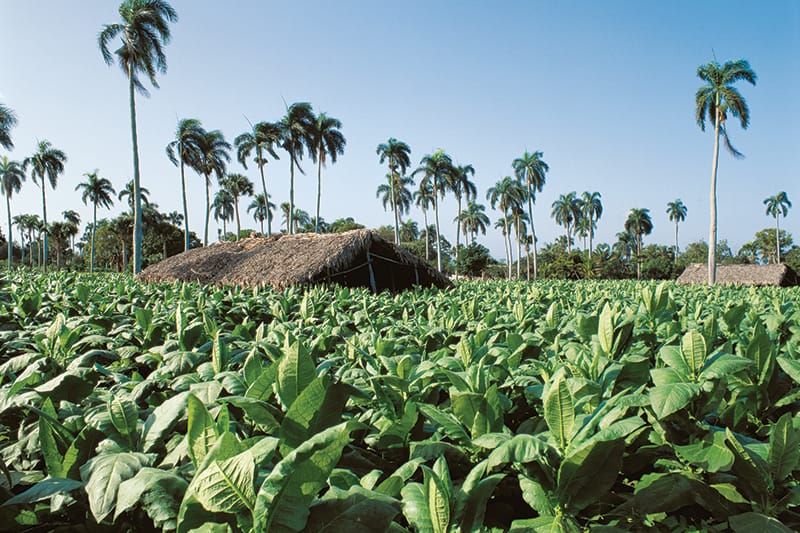
The relationship between the Dominican Republic and tobacco predates the premium cigar industry as it exists today. “The country, then the Spanish colony of Santo Domingo, was home to the first commercial tobacco cultivation carried out by Europeans”, and the crop remained a central part of the local economy from the colonial period onward. The shift toward export-oriented cigar manufacturing accelerated decades later, when Cuban cigar makers who left the island following the 1959 revolution brought seeds and rolling techniques that were absorbed into local production.
Today, the Santiago de los Caballeros region and the municipality of Tamboril account for most of that output; “Dominican cigars are estimated to make up roughly 44 percent of world production, ninety percent of which happens in the Santiago area”.
The houses that set the standard
La Aurora — Founded in 1903 in Guazumal, near Tamboril, it is recognized as “the first cigar factory established in the Dominican Republic”. The company moved production to Santiago de los Caballeros in 1912, and after decades of relying on Dominican filler paired with imported wrapper leaf, it succeeded in 1997 — its centennial year — in developing a viable Dominican-grown wrapper, following failed experiments dating back to the 1960s. That milestone led to the La Aurora 100 Años, which in 2004 was ranked second on Cigar Aficionado’s year-end list and cited as that year’s top-rated Dominican cigar.
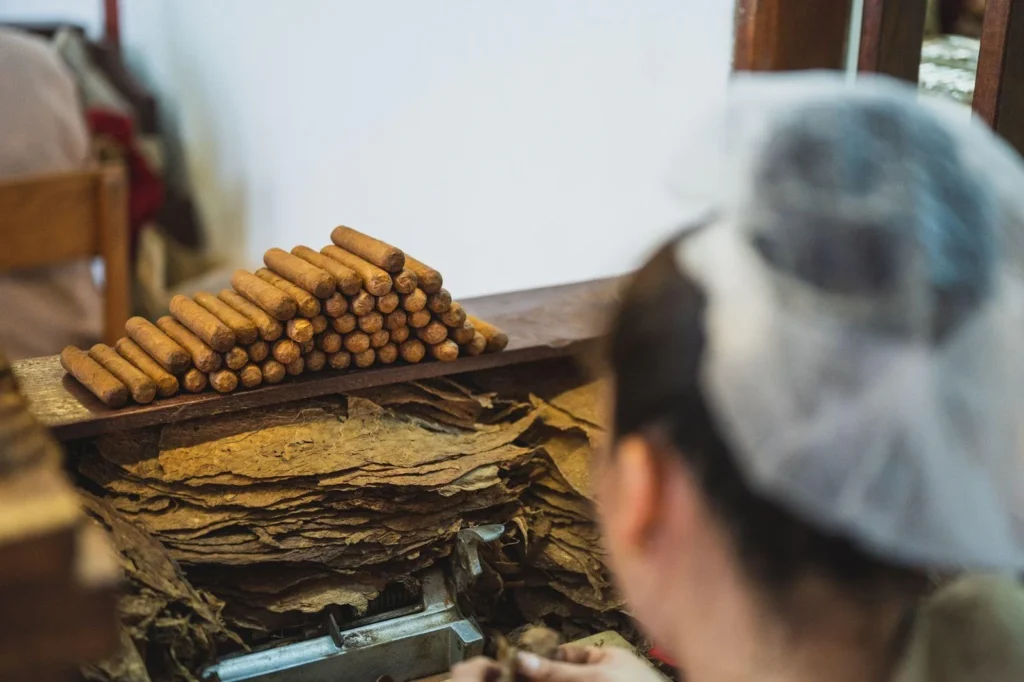
Tabacalera de García — Established in 1971 in La Romana by Pepe García, of the Menéndez García family (former owners of Cuba’s H. Upmann brand), following the broader migration of Cuban cigar makers to the Dominican Republic. Industry reporting has repeatedly described it as “one of the largest handmade cigar factories in the world“, with the capacity to produce “roughly 40 million cigars by hand each year”, and it is responsible for lines including Montecristo, Romeo y Julieta, H. Upmann, and VegaFina. In 2022, the facility was transferred to Tabacalera Group following the split of Imperial Brands’ premium cigar assets.
Together, the two houses illustrate the two currents that coexist in Dominican cigar-making: locally rooted family tradition (La Aurora) and the industrial scale inherited from historic Cuban brands rebuilt on Dominican soil (Tabacalera de García).
Blend categories worth recognizing
- Connecticut Shade / “cream” wrappers: mild to medium-bodied profiles with light wrapper leaf. This was the starting point for several Dominican factories, including Tabacalera de García, which began operations in 1969 processing primarily this wrapper variety.
- Dominican-grown, medium-to-full-bodied wrappers: commercially developed from the late 1990s onward, once houses like La Aurora resolved the agronomic issues that had blocked local wrapper cultivation for decades.
- Piloto Cubano and Corojo filler tobaccos: grown on farms such as Jacagua, in Santiago, and used as a base filler in much of the country’s historic brand portfolio.
How a Dominican blend is evaluated in editorial coverage
A rigorous assessment — the same standard Dominican Leaf applies in its reviews — is not built on adjectives but on verifiable criteria:
- Construction and draw: consistency of the bunch and absence of combustion issues.
- Flavor complexity and evolution across the smoke, not just the first third.
- Consistency across crop years and production batches.
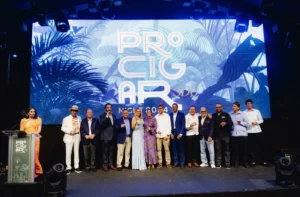
- Industry recognition: placement on year-end lists from specialized publications and participation in events such as the ProCigar Festival, which brings together the country’s major factories annually to present their production to trade press.
Editorial note
This guide will be updated periodically as Dominican Leaf publishes its own timed reviews of individual blends under the “Reviews” Post Type. Its role here is to establish the historical and technical framework before evaluating specific brands.
Sources consulted
- Cigar Aficionado — reporting on La Aurora and Tabacalera de García
- Cigar Journal — La Aurora history
- Bespoke Unit — brand history review
- Visit Dominican Republic — historical context on tobacco on the island