For the true cigar enthusiast, the concept of terroir is far more than a marketing buzzword—it is both a science and an art. Just as the vineyards of Bordeaux impart their character to wine grapes, and the mountainsides of Ethiopia shape the flavor of coffee beans, tobacco leaves are a direct expression of the soil that nourishes them and the climate that surrounds them.

In the Dominican Republic, there is a geographic sanctuary responsible for producing some of the most balanced, complex, and refined cigars in the world: the Cibao Valley. While many tobacco-growing regions build their reputation on the sheer strength and richness of their soils, the Cibao stands apart for something far more difficult to replicate—its remarkable aromatic complexity and the elegance of its smoke.
The Geography of a Sanctuary: Microclimates of the Valley
From a geological perspective, the Cibao Valley is a remarkably protected tectonic basin. To the north, the Northern Mountain Range serves as a natural barrier, shielding the valley from excessively cold and humid Atlantic winds. To the south, the Central Mountain Range blocks dry air currents. This geographic isolation creates a unique microclimate characterized by stable temperatures—typically ranging from 24°C to 27°C (75°F to 81°F)—and consistently favorable humidity levels, allowing tobacco plants to develop without significant water or heat stress throughout their growing cycle.
Even within the valley itself, certain areas are regarded by tobacco growers and master blenders as the equivalent of “single-vineyard” terroirs due to their distinct microclimatic characteristics.
Villa González
Widely considered the historic heart of Dominican tobacco production, Villa González benefits from its proximity to the foothills, where warm sunny days are balanced by cooler nights. This daily temperature variation creates ideal conditions for producing binder and filler tobaccos with pronounced sweetness, herbal nuances, and exceptional aromatic depth.
La Canela
This region features a noticeably drier, hotter, and more arid microclimate. Here, tobacco plants are forced to adapt to greater sun exposure, resulting in varieties such as Piloto Dominicano developing higher concentrations of essential oils. The outcome is tobacco with greater body, strength, richness, and the signature peppery character often associated with Dominican ligero.
Navarrete
Known for its highly consistent climatic conditions, Navarrete produces tobacco leaves with remarkable uniformity, fine veins, and excellent elasticity. These qualities make the tobacco particularly well-suited for curing and fermentation, while also contributing to the overall refinement and balance sought by premium cigar manufacturers.
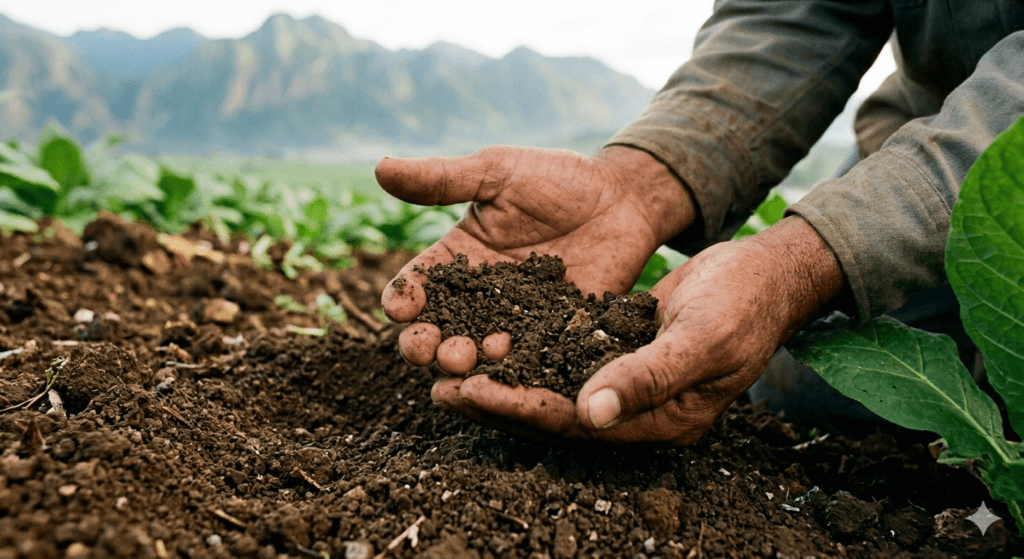
Soil Profile: Volcanic Nutrients and Perfect Drainage
The best-kept secret of the tobacco fields surrounding Santiago de los Caballeros is not found in the air, but beneath the boots of the harvesters. The soils of the Cibao Valley are composed primarily of deep alluvial deposits and a fertile silty clay loam structure enriched with minerals of volcanic origin.
Growing Insight: Unlike heavily compacted clay soils that retain excessive moisture—often leading to root stress and disease in tobacco plants—the Cibao’s silty loam composition provides naturally deep and efficient drainage.
This porous soil structure encourages tobacco roots to penetrate deeply into the subsoil in search of essential nutrients such as potassium, magnesium, and calcium. Potassium plays a critical role in combustion quality, contributing to the even burn and the firm, white ash that has become a hallmark of premium Dominican tobacco. Magnesium, meanwhile, enhances the plant’s photosynthetic efficiency, increasing the production of natural sugars within the leaf. The result is tobacco that develops the creamy texture, subtle sweetness, and distinctive nutty characteristics that seasoned tasters often identify in Dominican blends.
The interaction between these mineral-rich soils and the valley’s unique climate creates a tobacco profile defined not by raw power, but by balance, complexity, and refinement—qualities that have helped establish the Dominican Republic as the benchmark for premium handmade cigars worldwide.
Dominican Terroir vs. Central American Soils
It is one of the most common questions among cigar enthusiasts: Why does a Dominican cigar deliver such a different sensory experience from a Nicaraguan or Honduran cigar?
The answer begins with the land itself—and more specifically, with the maturity of the soil.
| Geological Attribute | Cibao Valley (Dominican Republic) | Nicaragua (Estelí / Jalapa Regions) |
|---|---|---|
| Soil Type | Alluvial, silty-loam soils rich in light mineral deposits | Deep, dark volcanic soils, dense and geologically younger |
| Dominant Flavor Profile | Cream, cedar, nuts, subtle sweetness, refined complexity | Black pepper, earth, leather, pronounced intensity |
| Retrohale Experience | Silky texture, nuanced stimulation, clean finish | More assertive spice, greater intensity, medium-to-full strength |
Many of Nicaragua’s renowned tobacco regions are defined by volcanic soils rich in minerals and organic matter, producing tobacco that is often bold, powerful, and highly expressive. Estelí, in particular, is famous for delivering intense spice, earthiness, and strength, while Jalapa contributes sweetness and aromatic complexity to the blend.
The Cibao Valley follows a different path.
Its older, highly evolved alluvial soils create an environment where traditional seed varieties and locally adapted hybrids can express themselves with remarkable balance and refinement. Rather than emphasizing raw strength, Cibao-grown tobacco is prized for its creaminess, subtle complexity, natural sweetness, and layered aromatic development throughout the smoking experience.
This distinction is what many seasoned smokers recognize immediately when comparing the two origins. Nicaraguan cigars often captivate with power, spice, and intensity. Dominican cigars, particularly those grown in the Cibao Valley, tend to reveal themselves gradually, rewarding the smoker with elegance, nuance, and a continuous evolution of flavors from the first draw to the final inch.
Neither style is inherently superior; they simply represent two very different expressions of terroir. One showcases strength and volcanic vigor, while the other demonstrates how balance, finesse, and aromatic complexity can create an equally compelling smoking experience.
Preserving the Legacy of the Soil
Understanding the terroir of the Cibao Valley is the first step toward appreciating the complexity of premium Dominican tobacco. From the careful selection of farmland in Villa González to the traditional curing process carried out in aging barns, every stage reflects and preserves the island’s unique geological heritage.
At Dominican Leaf, we explore these origins to better understand why the true essence of a Dominican cigar extends far beyond brands, blends, or vitolas. Its soul is rooted in the patience of the land, the richness of the soil, and generations of knowledge passed from one harvest to the next.
Every great cigar begins long before the seed is planted. In the Dominican Republic, it begins with the earth itself.