The wrapper is the most visible part of a cigar and one of the most technically misunderstood.
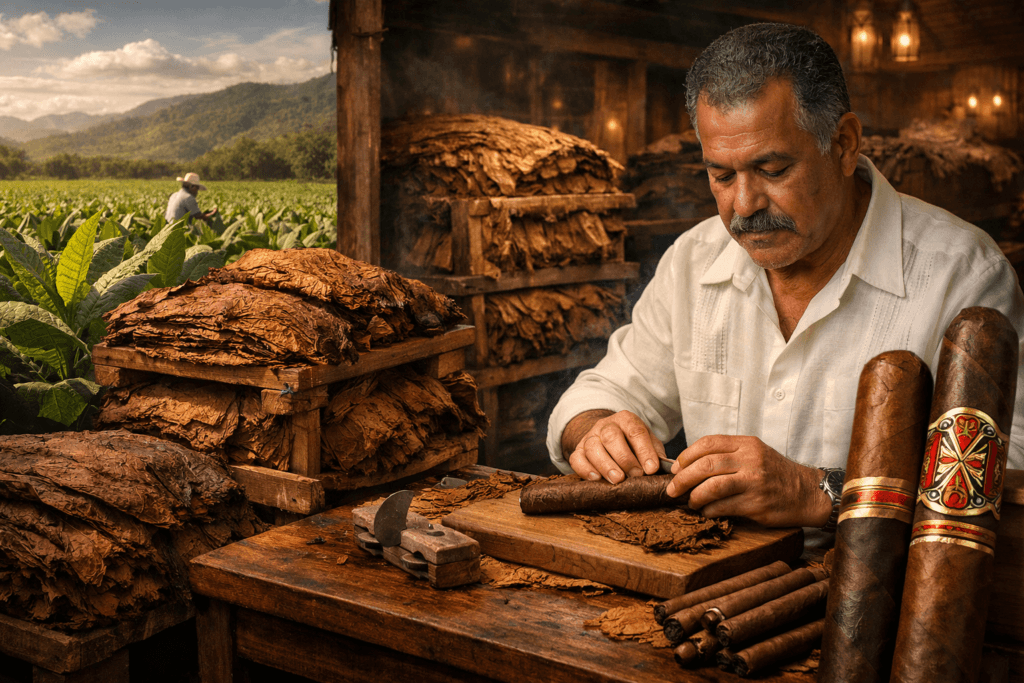
For years, the Dominican Republic was not considered capable of producing high-quality wrapper leaf. That perception changed with successful projects such as wrapper cultivation in Bonao.
Today, Dominican wrapper is part of the global premium standard.
What makes Dominican wrapper unique?
- Mineral-rich Cibao soil
- Diverse microclimates
- Post-1960s technical evolution
Main types
- Dominican Classic Wrapper
- Corojo Dominican Wrapper
- Yamasá Wrapper
- Bonao Wrapper (Opus X)
Each offers distinct structural and aromatic contributions.
Production overview
Wrapper production requires:
- Strict cultivation control
- Light management
- Careful fermentation
- Detailed classification
Editorial Conclusion
The Dominican wrapper has gone from being a perceived limitation to becoming a competitive advantage within the global industry.
Its value lies not only in its appearance but also in its ability to bring balance, complexity, and consistency to a cigar.
Understanding its types, origin, and production allows for a more precise analysis of a cigar.