Tabacalera A. Fuente & Cia
Factory History
Tabacalera A. Fuente y Cia. is the Dominican manufacturing operation of the Fuente family, one of the longest-established family-owned names in the premium cigar industry. Although the company’s origins date to 1912 in West Tampa, Florida, its modern manufacturing identity was largely shaped in the Dominican Republic after the Fuente family relocated its cigar operations to Santiago in 1980. ProCigar identifies Tabacalera Arturo Fuente as established in the Dominican Republic in 1980 and as a founding member of the association since 1992.
The Fuente family’s tobacco history predates the Dominican operation by several generations. Arturo Fuente established A. Fuente & Company in Tampa in 1912, beginning as a small family business in which cigars were rolled and blended in the family home. The company remained closely connected to the family as it expanded, with Carlos Fuente Sr. eventually assuming control of the business in 1956. During the following decades, the company experienced the same geographic and economic pressures that affected many cigar manufacturers operating in the United States and Central America.
The move to the Dominican Republic followed a particularly difficult period. Fuente operations in Nicaragua were destroyed during the Nicaraguan Revolution, and a subsequent factory in Honduras was also lost to fire. With limited financial resources remaining, Carlos Fuente Sr. and his son Carlos “Carlito” Fuente Jr. relocated to Santiago de los Caballeros. On September 4, 1980, they established Tabacalera A. Fuente y Cia. in Santiago. The operation began with only seven employees.
The decision to establish the factory in Santiago was closely connected to the structure of the Dominican tobacco industry at the time. The company initially operated inside Zona Franca No. 1, a free-trade industrial zone that provided an export-oriented manufacturing environment. Santiago was already becoming an important center for cigar production, with access to tobacco-growing regions and an established labor force of cigar rollers. Carlos Fuente Jr. later described the move as a practical decision based on the availability of tobacco and the advantages of the free zone.
The early Dominican operation was modest compared with the manufacturing complex associated with Fuente today. The family concentrated on rebuilding its tobacco inventory and establishing a stable production base. Carlos Fuente Sr. emphasized the importance of reinvesting profits into tobacco rather than treating short-term financial returns as the primary objective. This approach placed particular value on long-term tobacco aging, an element that subsequently became closely associated with Fuente manufacturing.
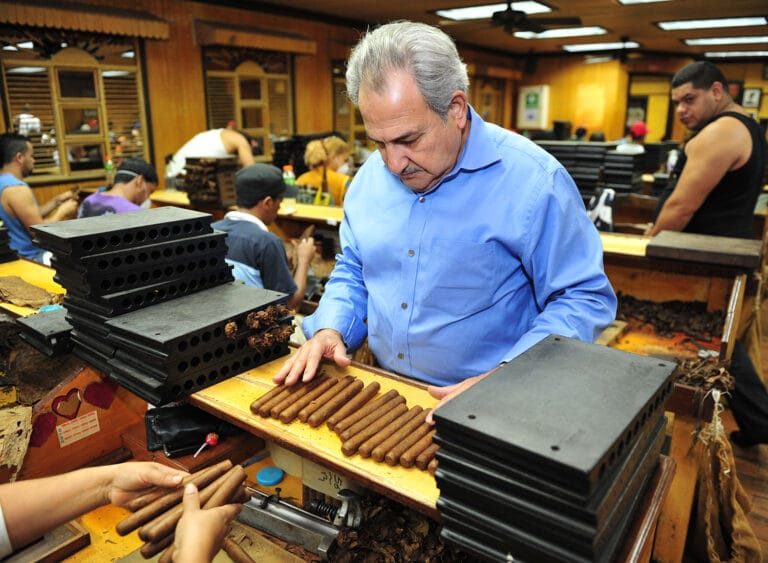
During the 1980s, the company began developing products that would become important to its Dominican identity. One of the most significant developments was the introduction of the Arturo Fuente Hemingway line in 1983. The line revived the use of the Perfecto shape, a format that had become considerably less common in the modern premium cigar market. Carlos Fuente Jr. and his father worked with traditional molds and production techniques to reintroduce these shapes, requiring specialized knowledge from experienced rollers.
The development of unusual shapes also illustrates an important characteristic of the Fuente factory: manufacturing is not limited to conventional production formats. Specialized rolling skills, molds and dedicated production areas have historically allowed the company to produce shapes that require a higher degree of manual control. This approach became increasingly important as Fuente expanded its portfolio of premium and limited-production cigars.
By the end of the 1980s, the Fuente family had also increased its involvement in tobacco cultivation. Rather than relying exclusively on purchased tobacco, the company began investing in agricultural infrastructure, including roads and curing barns. It eventually took on the more difficult challenge of growing wrapper tobacco in the Dominican Republic. Wrapper production requires careful management because the leaf must meet demanding standards for appearance, elasticity, texture and smoking performance.
That agricultural effort became particularly significant in the development of Fuente Fuente OpusX. In 1992, Carlos Fuente Jr. successfully developed Dominican-grown wrapper tobacco as part of what the family called “Project X from Planet 9.” The objective was to produce a premium cigar using Dominican tobacco in a way that could compete at the highest level of the international market. The development eventually resulted in the Fuente Fuente OpusX, widely regarded as one of the most consequential products in the history of Dominican premium cigar manufacturing.
The significance of this development was not limited to a single cigar line. Producing a successful Dominican wrapper demonstrated that the country could supply tobacco capable of serving as the wrapper component of a high-end cigar, not simply as filler or binder. This contributed to the broader evolution of Dominican tobacco production and reinforced the Dominican Republic’s position within the premium handmade cigar industry.
The 1990s also brought substantial expansion in the Fuente manufacturing operation. The company grew beyond its original facility and developed a broader network of production facilities in Santiago and surrounding areas. Historical reporting from Cigar Aficionado documented multiple Fuente factories in the Dominican Republic and described the company’s ability to produce both its own brands and cigars manufactured for other companies.
This distinction is important when evaluating Tabacalera A. Fuente y Cia. as a factory rather than simply as the manufacturer behind the Arturo Fuente brand. The company’s manufacturing history has included proprietary Fuente cigars as well as contract and collaborative production. Historical examples documented by Cigar Aficionado include cigars associated with Ashton and Diamond Crown, demonstrating the factory’s broader role within the premium cigar supply chain.
The Fuente operation has also maintained a strong emphasis on tobacco aging. Historical reporting has documented substantial inventories of aged tobacco, including wrapper tobacco that had been stored for many years. This approach requires significant investment in inventory, storage infrastructure and working capital because tobacco must be purchased and maintained long before it becomes a finished cigar. For a manufacturer operating at scale, maintaining aged inventory represents both a production strategy and a financial commitment.
The physical factory itself underwent a major transformation during the 2010s. Beginning around 2015, Carlos Fuente Jr. undertook a significant redevelopment of the Santiago complex. The operation expanded into adjacent buildings, creating a larger interconnected manufacturing environment containing areas dedicated to tobacco preparation, rolling, aging and packaging. By the time the expansion was documented by Cigar Aficionado, the complex had grown to four facilities within the free zone.
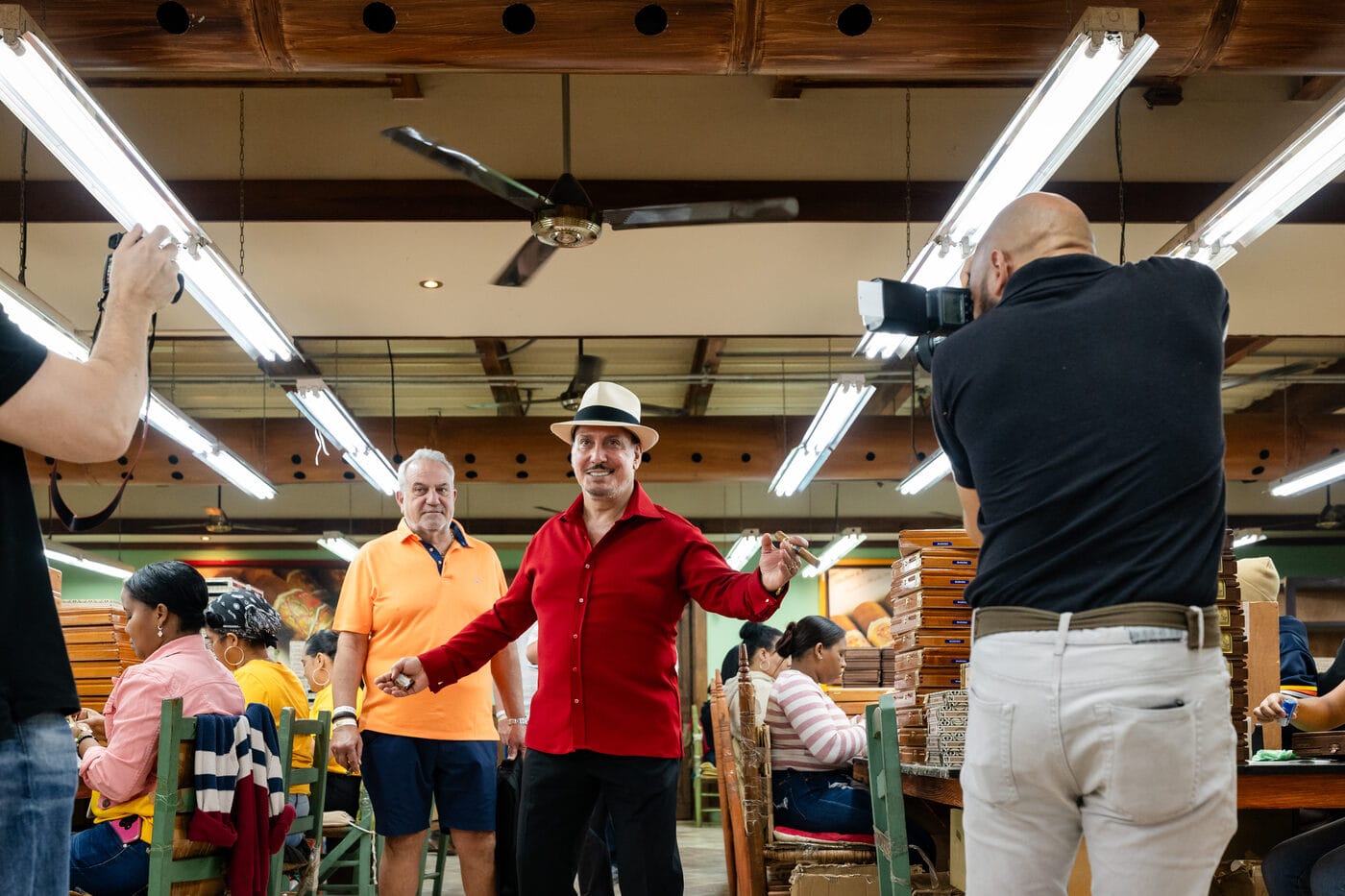
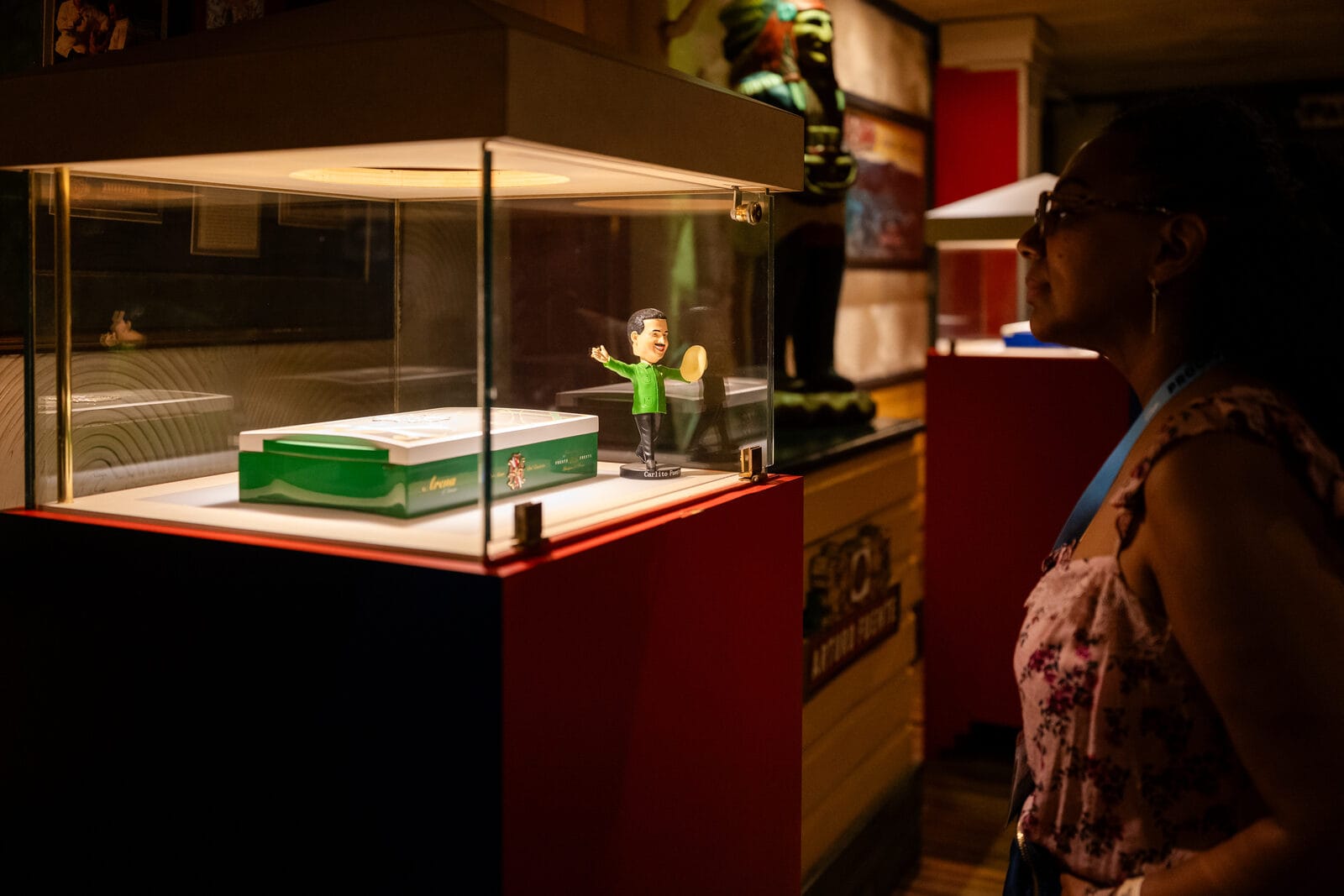
The factory’s architecture and internal spaces also reflect the Fuente family’s approach to manufacturing culture. Rather than treating the facility solely as an industrial production site, the expanded complex incorporates historical references, family memorabilia and spaces associated with the family’s Cuban, Tampa and Dominican heritage. Dedicated rolling rooms have been designed around different themes, while production areas continue to function as working manufacturing spaces. Recent coverage of the factory has documented specialized rolling rooms, aging areas and other production-related facilities.
A separate box-manufacturing facility was added to the operation in the late 2010s. The Fuente family broke ground in 2018 on a 69,000-square-foot box factory located across from the main factory complex. The development illustrates how the company’s manufacturing infrastructure extends beyond cigar rolling itself into packaging and presentation.
The company has also experienced significant setbacks during its Dominican history. On August 25, 2011, a fire destroyed two large tobacco warehouses belonging to Tabacalera A. Fuente y Cia. in Villa González near Santiago. The warehouses contained significant quantities of aged tobacco, making the incident particularly consequential for a manufacturer whose production strategy depends heavily on long-term tobacco inventory.
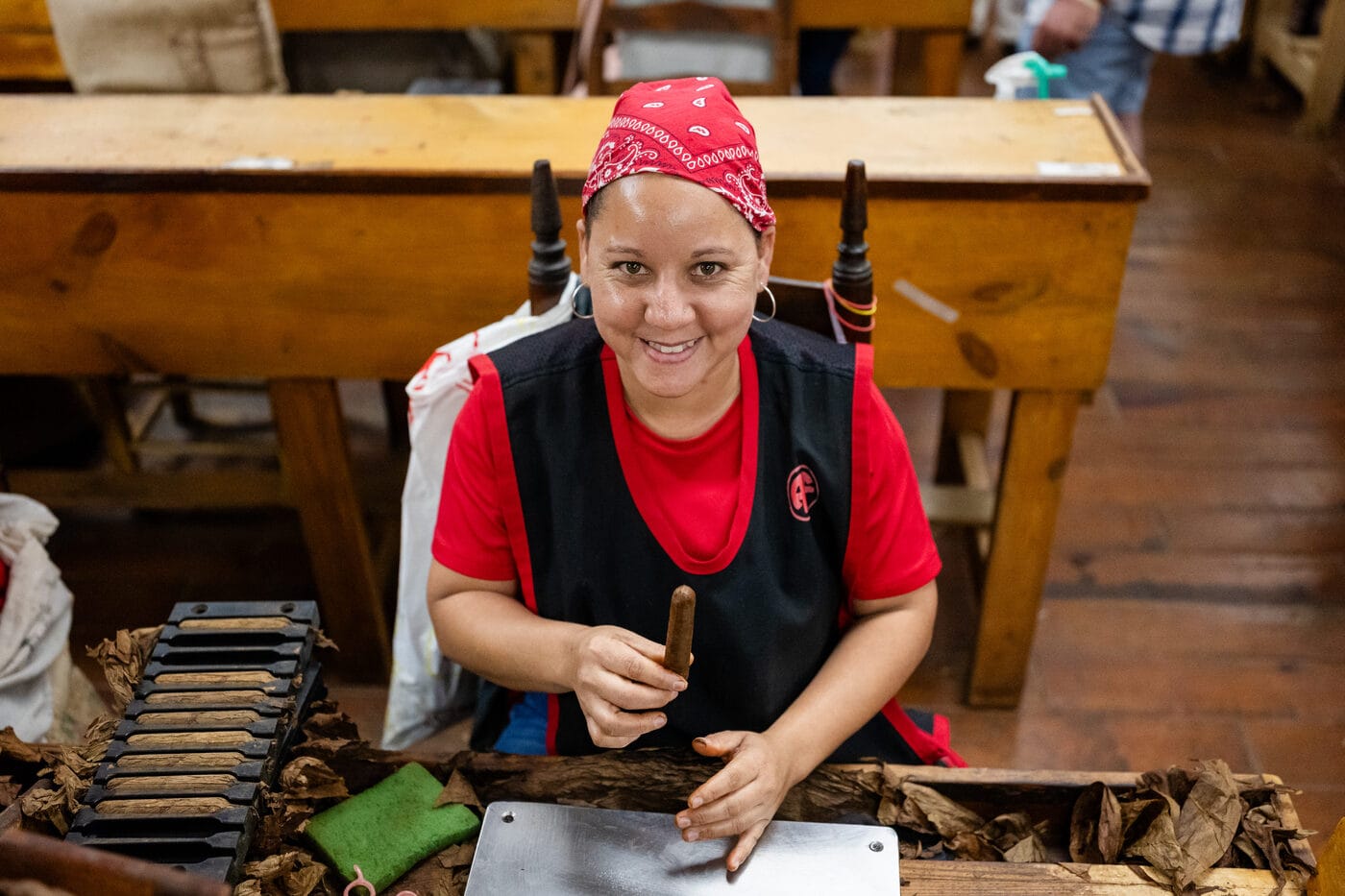
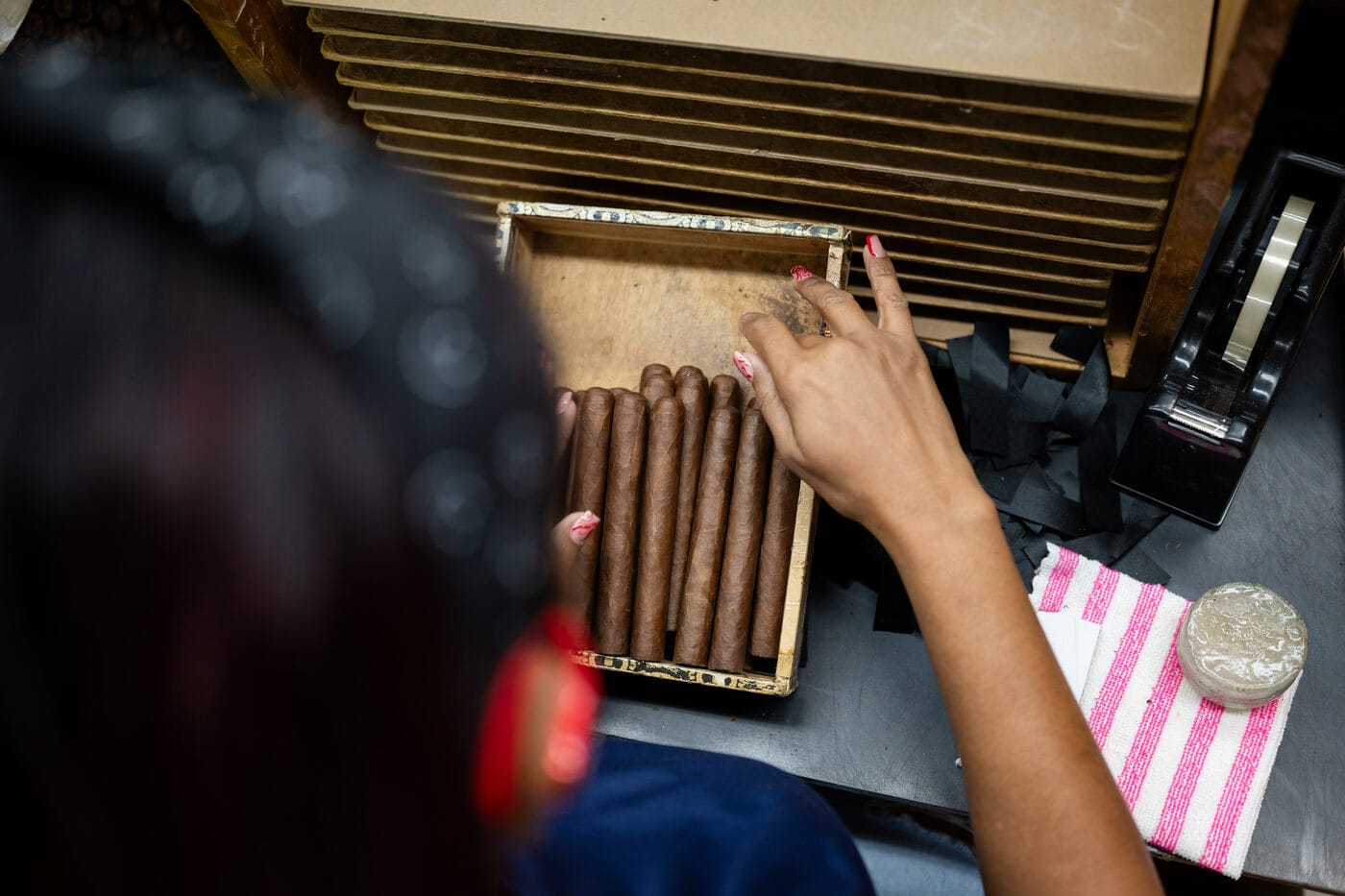
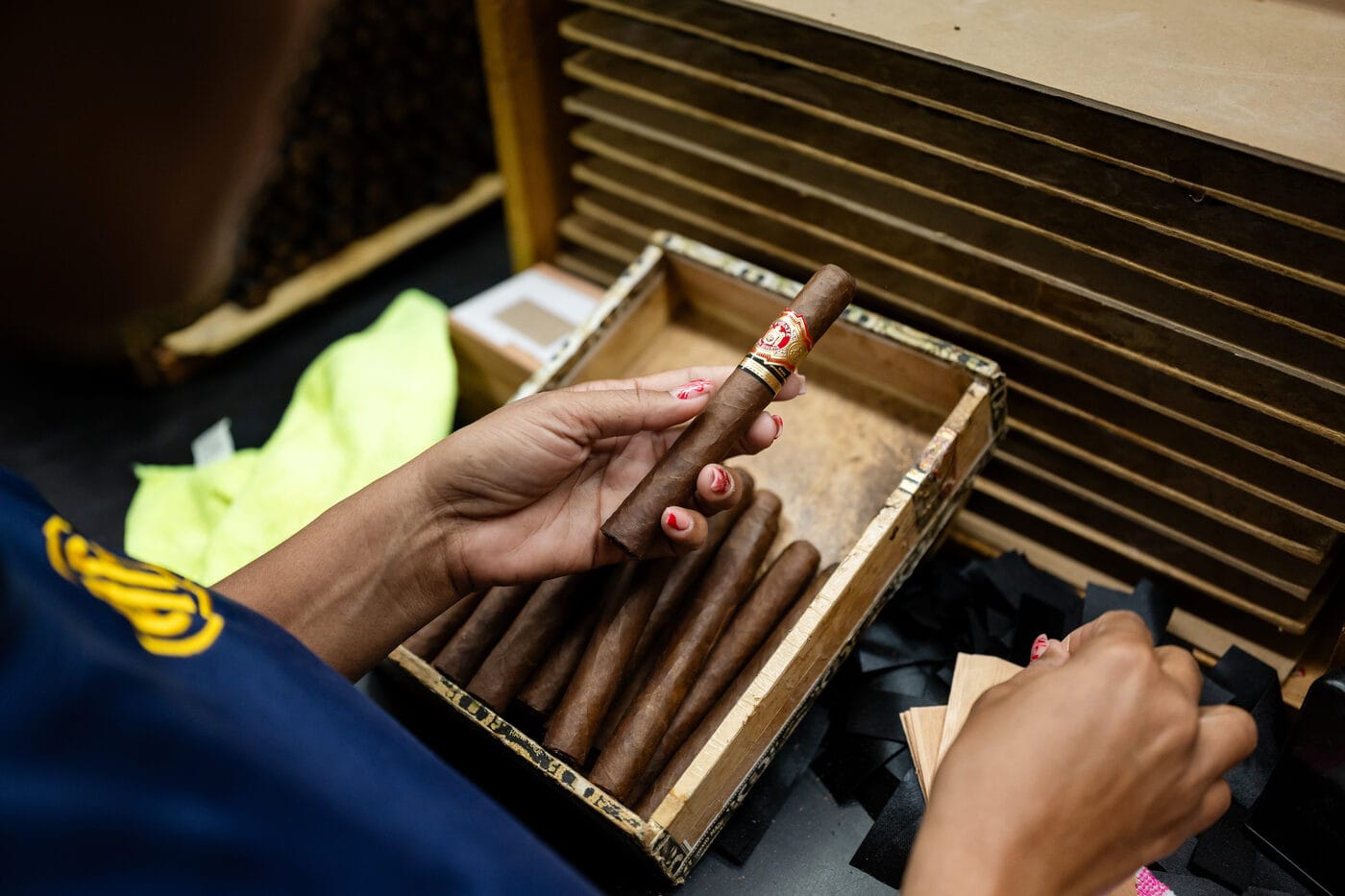
Despite these setbacks, Tabacalera A. Fuente y Cia. continued to expand its manufacturing capabilities. The factory now represents a multi-stage production operation involving tobacco preparation, bunching, rolling, quality control, aging and packaging. The scale of the organization has changed considerably from the seven-person operation established in 1980, while its production remains centered on handmade premium cigars. Historical industry reporting has documented annual production measured in tens of millions of handmade cigars, although production volumes can vary by year and should not be treated as a current production figure without updated company disclosure.
From a manufacturing perspective, the importance of Tabacalera A. Fuente y Cia. is therefore not simply its association with a famous cigar brand. The factory represents the culmination of four generations of Fuente family involvement in tobacco, the relocation of a historic American cigar company to the Dominican Republic, the development of Dominican wrapper tobacco, extensive investment in aged tobacco and the preservation of specialized handmade cigar production techniques. ProCigar identifies the company as a Dominican manufacturer operating since 1980 and as one of the association’s founding members.
Today, Tabacalera Arturo Fuente remains family-owned and continues to manufacture premium cigars in the Dominican Republic. Its production portfolio includes Fuente’s core and specialty lines, while its facilities in Santiago form an important part of the company’s overall manufacturing and tobacco-aging infrastructure. The factory is also included within the broader ecosystem of the ProCigar Festival, through which visitors can gain access to participating Dominican cigar manufacturers and tobacco operations.
The history of Tabacalera A. Fuente y Cia. is ultimately a history of adaptation. The factory was created after the loss of previous manufacturing facilities, developed during a period of major growth in the Dominican cigar industry, expanded through agricultural investment and tobacco aging, and later transformed into a large and highly specialized manufacturing complex. Its significance lies not only in the brands produced there, but in the manufacturing knowledge, agricultural experimentation, labor and infrastructure accumulated in Santiago over more than four decades.